Keeping a Senior Dog Hydrated: The Verdict on What Actually Works
Medically reviewed by Roger Clemmons, DVM, PhD, DACVIM (Neurology and Neurosurgery), CVA, CVFT — For general education — not a substitute for veterinary care.
An old dog that stops drinking enough water isn't being picky — it's usually the first vital sign to slip, and it deserves that level of attention.

On this page
- The Verdict: Water Intake Is a Vital Sign, Not a Housekeeping Detail
- Myth vs. Reality: “She’ll Drink When She’s Thirsty”
- Where the Skin-Tent Test Lies to You
- Where Hydration and Digestion Overlap — and Where the Evidence Actually Sits
- A Practical Sequence for the Water Bowl, the Food Bowl, and the Vet Visit
- The Bottom Line
The Verdict: Water Intake Is a Vital Sign, Not a Housekeeping Detail
I’ll give you the call up front, because that’s how I was trained to practice: in a senior dog, water intake belongs on the same monitoring list as appetite, weight, and gait. Not below it. A ten-year-old Labrador who’s drinking noticeably less — or noticeably more — is telling you something before bloodwork ever will, and owners who wait for a dramatic symptom before mentioning it to their vet are almost always six weeks behind where they wanted to be.
That’s not alarmism. It’s arithmetic. Older kidneys lose concentrating ability gradually, senior joints make the walk to a far-away water bowl less appealing, and cognitive change can make a dog forget the bowl even exists. Each of those is manageable on its own. Missed together, they compound.
In my practice, I’ve watched this play out with a 12-year-old spayed female Cavalier King Charles Spaniel, about 16 pounds, whose owner brought her in not for thirst but for what she described as “just seeming a little dull in the evenings.” The dog’s gums were tacky rather than dry-dry, her stairs were slower by maybe a beat, and — this is the detail that mattered — she’d started leaving water in her bowl overnight when she used to drain it by morning. Bloodwork that visit showed early renal changes we could act on immediately instead of six months later. Nothing about that presentation screamed dehydration. It whispered it.
Myth vs. Reality: “She’ll Drink When She’s Thirsty”
The myth is comforting and mostly wrong. Thirst drive itself can blunt with age, and a dog with early cognitive dysfunction may lose track of drinking the way she loses track of the back door. According to AAHA, tracking water intake is part of routine senior monitoring precisely because a change in drinking behavior is one of the earliest, most reliable signals that something medical is developing — often before other signs show up.
The reality worth defending: hydration status in an older dog is a trend line, not a single observation. One dry-mouthed morning after a long walk means little. A pattern over two or three weeks — more water left in the bowl, more frequent but smaller drinks, or a steady creep upward in how much she’s draining — is the thing to write down and bring to an appointment.
Where the Skin-Tent Test Lies to You
Most owners were taught the pinch test: lift a fold of skin at the scruff, watch how fast it snaps back. It’s a legitimate tool in a young, lean dog. It becomes unreliable in exactly the population this article is about. Zoetis Petcare notes that dehydrated dogs typically show dry, sticky, or tacky gums and dull, sunken eyes — but skin elasticity itself declines with age and body condition, so a slow-returning tent in a lean or geriatric dog can overestimate dehydration that isn’t really there.
I don’t rely on the tent test alone in a patient over eight or nine. I look at gum tackiness, capillary refill, eye position, and — critically — what the owner reports about the water bowl at home. No single sign closes the case. That’s the whole argument for tracking more than one variable, the same way I wouldn’t stage a neurologic case off one reflex.
Where Hydration and Digestion Overlap — and Where the Evidence Actually Sits
This is the part most hydration articles skip, and it’s where an evidence-first approach earns its keep. Fluid loss in an older dog rarely comes only from “not drinking enough.” It also comes out the other end. Conditions like exocrine pancreatic insufficiency (EPI) produce malabsorption and often loose, high-volume stool, and standard management is layered rather than singular: JAVMA describes EPI as “treated by pancreatic enzyme replacement therapy, nutritional management (low-residue diets with moderate fat content), and supplementation of cobalamin” — with the same review noting that researchers are still working to understand why persistent gut dysbiosis can linger even after enzyme therapy is started.
That matters for hydration because chronic diarrhea, whatever the cause, is a fluid drain that competes with anything a dog drinks at the bowl. Fiber quality is part of that picture too — pumpkin fiber, for example, functions as “a gentle, natural source of both soluble and insoluble fiber,” which is the structural reason it’s a common recommendation for firming loose stool and supporting normal transit rather than a cure for any specific disease. On the microbiome side, a balanced gut microbiome supports overall immune function, though the evidence here is genuinely mixed on which dogs benefit most: a peer-reviewed RCT in Frontiers in Veterinary Science on probiotic supplementation found that diversity metrics did not distinguish non-responders from responders — meaning a healthier-looking microbiome on paper didn’t reliably predict who actually improved. I’d rather tell you that plainly than oversell a supplement category.
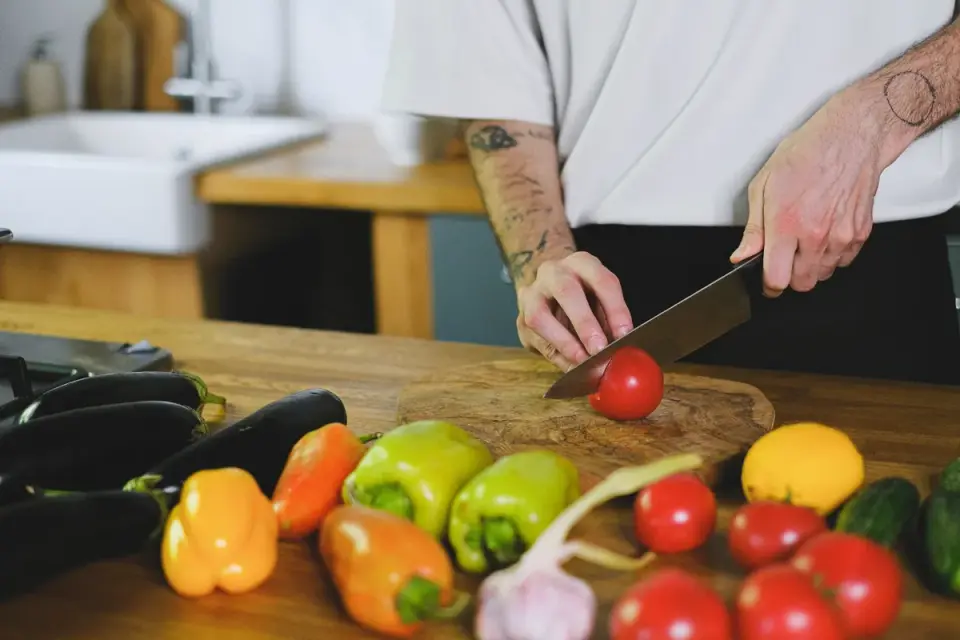
The connective tissue between digestion and hydration also shows up in what dogs eat day to day. A senior dog getting the fiber and moisture content in fruit like apples or bananas as an occasional addition to the diet is getting a small water contribution alongside the fiber — not a substitute for the water bowl, but not nothing either. The same logic applies to fattier foods like avocado: the concern there is pancreatic load and GI upset in a dog already managing sensitive digestion, and GI upset is its own hydration risk in an old dog with less physiologic reserve.
A Practical Sequence for the Water Bowl, the Food Bowl, and the Vet Visit
I don’t hand owners a single tip and call it done. I hand them a sequence, because senior hydration is rarely solved by one change.
First, place multiple water stations — not just one bowl in the kitchen. A dog with arthritis or early cognitive decline may simply stop making the trip to a bowl that’s inconveniently far, and a second bowl near a resting spot removes that barrier entirely.
Second, consider adding water to kibble or offering a portion of the diet as wet food, particularly if urine looks concentrated or the dog has any diagnosed kidney changes. This is standard, low-risk advice repeated across kidney-disease management resources, including IRIS Kidney, which frames correcting and preventing dehydration as a core management goal starting at IRIS Stage 2 chronic kidney disease, with adequate water intake described as dependent on the dog’s own compensatory drive to drink more as kidney function declines.
Third, track intake, don’t just eyeball it. Refill the bowl to a marked line each morning and check it at night for two weeks. A real trend is far more useful than a single day’s observation.
Fourth, loop in your veterinarian at the first pattern change, not after a crisis. A dog drinking more, drinking less, or refusing to finish the bowl for a week straight is worth a phone call, not a wait-and-see.
I’ve had owners tell me they felt silly calling about “just water.” I’ve never once thought that. In my practice, the CKC I mentioned earlier came back for a recheck eight weeks later, water intake logged nightly on a kitchen whiteboard, gums pink and moist, stairs back to her normal pace. Nothing dramatic happened in between — just enzyme support for the malabsorption piece, a second water bowl by her bed, and a diet adjustment her internist and I agreed on together. Reach for both the imaging study and the acupuncture needle, I tell residents, because the dogs who do best are the ones whose owners are handed a plan that respects both the lab values and the daily, unglamorous habits at home. That’s not poetic license. It’s the difference between a chart note and a dog that’s actually doing better in six weeks.
The Bottom Line
Track water intake in your senior dog the way you’d track appetite or weight — as a trend, not a single glance at the bowl. Don’t trust a slow skin tent alone to rule dehydration in or out in an older or lean dog; look at gums, eyes, and behavior together. And remember that hydration and digestion are linked: loose stool from any cause is a fluid drain, so a fiber and gut-support strategy your vet signs off on is part of a hydration plan, not a separate conversation.
Frequently asked questions
How much water should an old dog be drinking each day?
A commonly cited general guideline is around one ounce of water per pound of body weight per day, though individual needs vary with diet, activity, and any diagnosed conditions — a sustained change from your dog's own normal is more informative than hitting an exact number.
Is the skin-tent (pinch) test reliable for checking dehydration in an old dog?
Less so than in a young, lean dog. Skin elasticity naturally declines with age, so a slow-returning tent can overestimate dehydration in a senior or thin dog. Checking gum moisture, eye appearance, and behavior alongside the skin test gives a more honest picture.
Sources
- IRIS Guidelines — IRIS Kidney
- 2023 AAHA Senior Care Guidelines for Dogs and Cats — AAHA
- Signs of Dehydration in Dogs — Zoetis Petcare
- Exocrine pancreatic insufficiency and gut dysbiosis review — JAVMA
- Probiotic supplementation and responder diversity metrics — Frontiers in Veterinary Science