Why a Senior Dog Seems Confused in Familiar Rooms
Medically reviewed by Bianca Coleman, DVM — For general education — not a substitute for veterinary care.
A senior dog freezing mid-hallway in the house he's lived in for years is telling you something real.
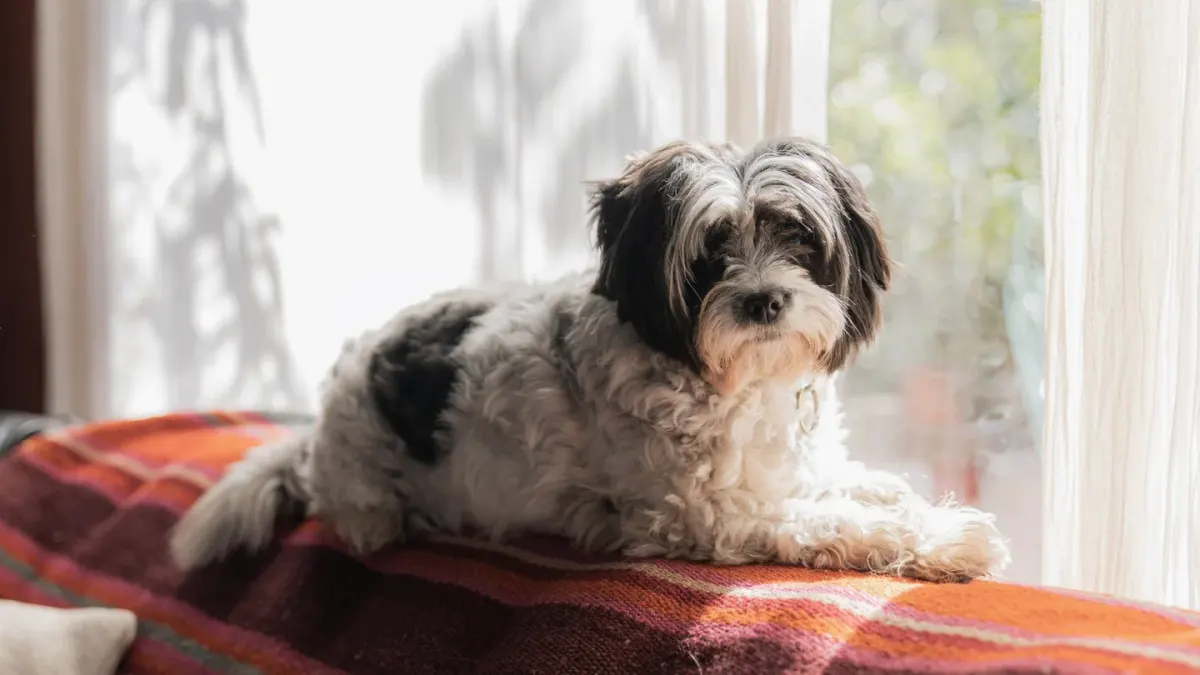
My triage question with owners is almost always the same: is this dog lost, or is this dog hurting? A 12-year-old Labrador who stands frozen at the edge of the kitchen, staring at a wall he’s walked past ten thousand times, isn’t limping and isn’t crying out. He’s just stuck. That distinction — confusion versus pain — is where I start working the case, because the two look nothing alike once you know what to watch for, and they point down very different paths.
The limitation nobody mentions: this usually isn’t a “just old age” problem
Owners tend to describe disorientation in familiar rooms as a personality quirk — “he’s gotten a little slow” — but veterinary behaviorists treat it as a real clinical sign. Cornell University College of Veterinary Medicine describes canine cognitive dysfunction as a progressive, age-related condition tied to changes in the aging brain, and getting lost in a familiar environment is one of its more recognizable features. It isn’t willful, and it isn’t a training lapse. The brain changes are real, even if the room hasn’t moved an inch.
The working framework most veterinarians use for these behavior changes is an acronym, not a vague impression. According to AAHA’s senior care guidelines, the DISHAA categories — disorientation, social interaction changes, sleep-wake disruption, house-soiling, activity changes, and anxiety — give a structured way to track what’s shifting instead of writing it off as “senior stuff.” Disorientation in a familiar room falls squarely under the D.
I saw a version of this two years into practice: a 10-year-old, 62-pound mixed-breed dog whose owner called because he’d started pacing into corners and standing there, nose to the baseboard, for what she timed at almost three full minutes. Nothing in the house had changed — same furniture, same rugs, same doorway he’d used since he was a puppy. What had changed was him. We ruled out an ear infection and early cataracts before circling back to cognitive change, because disorientation has more than one cause and the room is rarely the actual problem.
Myth versus reality: it’s not always dementia, and it’s not nothing either
The myth is that any confused-looking senior dog has “doggy Alzheimer’s” and there’s nothing to do but wait it out. The reality is messier. Veterinary Partner notes that cognitive dysfunction syndrome is a diagnosis of exclusion — your veterinarian rules out vision loss, hearing loss, orthopedic pain that changes how a dog navigates, and metabolic disease like thyroid or kidney dysfunction before landing on CDS as the explanation. A dog who can’t see well doesn’t wander confidently through a familiar room either, and that can look exactly like disorientation from the couch.
The other myth cuts the opposite way: that because CDS can’t be cured, there’s no point evaluating it. That’s not how I’d work the case. Even without a cure, an earlier read on what’s driving the confusion changes the plan — pain management if arthritis is masquerading as hesitation, medication if it’s true cognitive decline, or reassurance if it’s something correctable like vision.
Ingredient-level evidence is where I get more careful, and where the hedge matters. Quercetin is a flavonoid studied for antioxidant, immune, and cellular support properties, and it shows up often in senior-support formulas marketed for brain health. But a lot of that evidence sits in preclinical and cell-based work rather than dog trials — in one in vitro study, researchers found that quercetin fractions “did not affect the feeding behavior of the worms” (DOI.3390/ph19040525) at the concentrations tested, which is a reminder that promising lab data doesn’t automatically translate into a behavior change you’ll see in your own dog. Resveratrol carries a similar asterisk: one study found that embryonic exposure to a related compound “accelerated pupation and adult emergence but shortened adult lifespan” (DOI.1016/j.phymed.2026.158531) — a result from an entirely different model organism, and a useful example of why dose and species matter enormously before anyone extrapolates a benefit to a 13-year-old dog standing confused in a hallway. I’d rather tell an owner “the antioxidant story is plausible but thin at the dog-trial level” than oversell a supplement on lab data that wasn’t run in dogs, at doses that weren’t tested in dogs.

A practical sequence, not a panic response
Start with the basics before assuming the worst. Book a veterinary visit and be specific about what you’ve seen — not “he’s acting weird” but “he stood staring at the wall for two minutes on Tuesday” or “he tried to walk through the hinge side of the door three times this week.” Ask your vet to check vision, hearing, joints, and bloodwork before cognitive dysfunction becomes the working diagnosis.
A failed approach I still see owners try first: rearranging furniture to “help” a disoriented dog re-learn the room, on the theory that a fresh layout will re-engage his attention. In practice it usually backfires. A 9-year-old client dog, roughly 40 pounds, went from occasional evening pacing to full nighttime distress within about a week of a living-room reorganization — his owner had moved the couch and rugs, and losing the fixed landmarks he’d relied on made the disorientation worse, not better. Predictability is the tool that actually helps a cognitively changing dog navigate a familiar space; novelty is not.
There’s also an edge case worth flagging before you settle on a plan: timing matters more than most owners expect. A 14-year-old, 18-pound terrier mix I worked with only showed the confused, frozen-in-the-hallway behavior between roughly 7 and 9 p.m. — clockwork, almost to the hour — while mornings looked completely normal. That evening-specific pattern is sometimes called “sundowning” in these dogs, and it changes how you apply the guidance: a daytime obedience check won’t catch it, and a plan built only around morning walks will miss the actual problem window entirely.
Keep the environment stable, keep a consistent daily rhythm of feeding, walks, and lights, and loop in your veterinarian on any supplement or medication decision rather than guessing. If joint pain is complicating the picture too, our piece on cold weather and senior-dog stiffness walks through how to tell true arthritis flares from ordinary cold-weather achiness. And if sound sensitivity is part of what’s changed, why an old dog startles at sounds he used to ignore covers a related sensory shift worth ruling out alongside vision and cognition. Immune health is a separate but related thread for aging dogs; our guide to supporting a senior dog’s immune system covers what that evidence actually supports.
Bottom line: a senior dog frozen in a room he knows by heart is describing a real change in his brain, his senses, or his joints — not a behavior problem to correct. Work the case in that order — pain and senses first, cognition second — and treat any supplement claim about reversing that confusion with real skepticism until it’s been tested in dogs, not worms or fruit flies.
Frequently asked questions
Is a senior dog getting lost in familiar rooms always dementia?
Not always. Vision loss, hearing loss, joint pain, and metabolic disease can all cause similar disorientation, which is why veterinarians rule those out before diagnosing cognitive dysfunction syndrome.
Should I rearrange the house to help a confused senior dog?
Generally no. A stable, predictable layout helps a cognitively changing dog navigate; sudden rearranging tends to make disorientation worse.
Sources
- Cognitive dysfunction syndrome — Cornell University College of Veterinary Medicine
- Managing Cognitive Dysfunction and Behavioral Anxiety — AAHA
- Cognitive Dysfunction Syndrome in Dogs — Veterinary Partner
- Quercetin feeding behavior study — DOI:10.3390/ph19040525
- Resveratrol lifespan study — DOI:10.1016/j.phymed.2026.158531