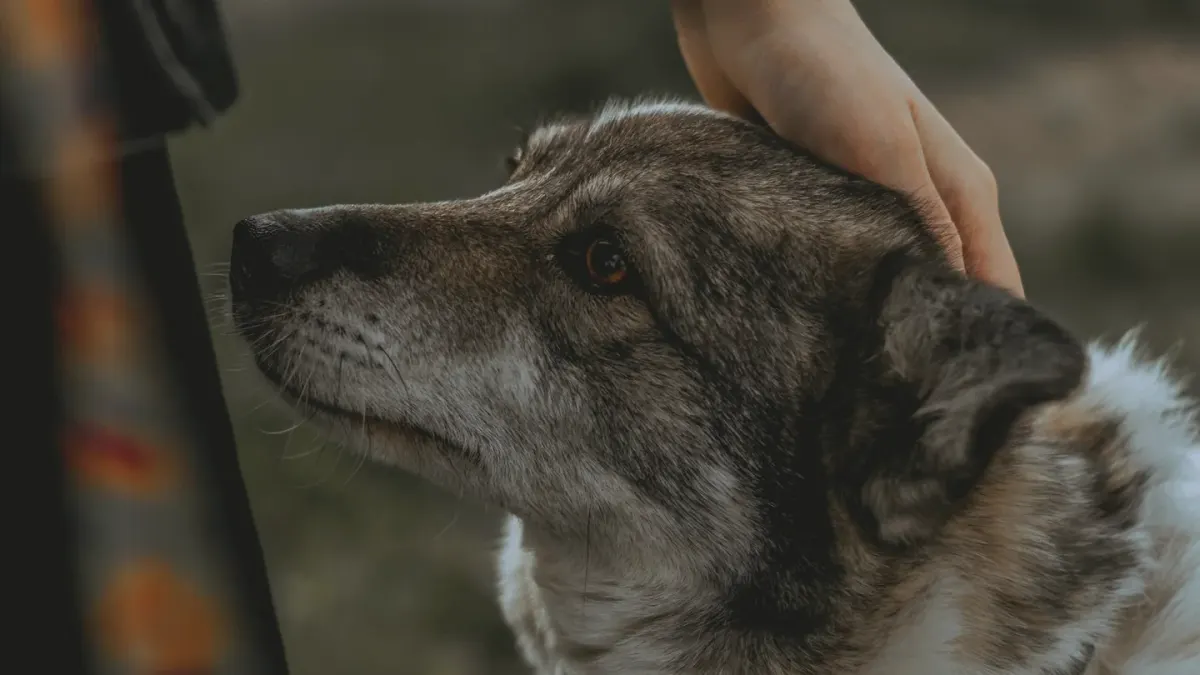
Most older dogs are not becoming dominant or spiteful when they start to snap at other dogs. Their margin for discomfort has narrowed.
That is the call to make first: expect less patience when the body hurts, the senses fade, and sleep breaks apart. The behavior is new, but the physiology behind it usually is not sudden. Pain raises arousal, hearing and vision loss removes early warning, and cognitive change slows recovery after a scare. Put those three together and a dog who once tolerated a bouncy greeting now says no early and loudly.
Vets often see this shift around nine to twelve in medium and large dogs, and a little later in small breeds. Michael in Lowell noticed it in Phineas, his 13-year-old neutered male Cairn Terrier, when Phineas began freezing and then air-snapping when off-leash dogs rushed within about six feet at the park. Nothing had changed in training. What had changed was how much input Phineas could absorb before he felt trapped.
The limit you are seeing is usually pain first
Osteoarthritis, dental pain, and neck or back soreness do not always cause limping. In senior dogs they often show as irritability around movement. A young dog bumps a hip and the older dog startles, anticipates pain, and corrects before contact happens.
Mechanism matters here. Ongoing pain keeps the stress system primed, so the threshold for a defensive response drops. A dog already at a five out of ten needs only a small push to reach a growl. Management that lowers baseline pain — weight control, traction at home, shorter and more frequent walks, veterinary pain assessment — often restores more tolerance than any training drill alone.
If tolerance dropped within weeks, treat it as medical until proven otherwise. Prioritize a hands-on exam, gait and spinal palpation, mouth exam, and eye and ear check over assuming temperament.
Senses, sleep, and thinking change the social math
An aging dog hears less, sees less in dim light, and startles more easily. When a dog cannot track an approaching dog until it is close, there is no time for polite signaling. The response jumps from nothing to snap.
Sleep fragmentation adds to the problem. Older dogs wake more at night, nap less deeply by day, and recover slowly after excitement. Cognitive change can also blunt learning: the dog forgets familiar dogs faster, gets stuck in corners or doorways, stares blankly, or paces at night.
Watch for the pattern across a week. Pain-based intolerance spikes around touch, stairs, cold mornings, or long play. Sensory-based intolerance spikes on surprise approaches, from behind or in low light. Cognitive-based intolerance looks more confused than confident, with staring, wandering, or delayed response to cues the dog once knew.
What to do in order, without making it worse
Stop rehearsing the hard moments. Cross the street, shorten greetings to three seconds, and give the older dog an exit before the other dog arrives. Space is prevention.
Then rebuild predictability. Keep the same walking route and time of day when you can, ask for one well-known cue like sit or hand touch at a distance where your dog can still eat treats, and reward quiet noticing of other dogs rather than forcing close passes. For help reading early stress signals, use A First-Time Owner’s Guide to Recognizing Dog Anxiety and for rewarding settled behavior between encounters, use Capturing Calmness: Rewarding the Quiet Moments.
After a reaction, do not drill. Let the dog decompress on a sniff walk away from traffic, keep the next day quiet, and log what preceded the event: distance, dog type, leash tension, surface, and time since rest. If reactions cluster on leash or on narrow paths, borrow the management ideas in Calm Walking Routes and Management for a Reactive Dog. If you are working on changing the emotional response, After Your First Counter-Conditioning Session: What Comes Next lays out what progress between sessions should look like.
My position is simple: manage health and distance before you train sociability. I defend that order because pain and sensory loss respond faster to veterinary care and management than to exposure, and because repeated flooding can make the next greeting worse. What would change my mind? A clean pain and neurologic workup plus normal vision, hearing, and sleep, with intolerance that still only appears with specific dogs or contexts. That pattern points more toward learned behavior, and then training takes the lead.
Where do calming ingredients fit? L-theanine is an amino acid found in tea that has been studied for its calming properties, and traditional herbs such as chamomile have been used to support relaxation. A Iranian Journal of Pharmaceutical Research review of apigenin noted it exhibited a favorable safety profile across included studies, even at high doses. The evidence in dogs for social tolerance specifically is thin or mixed, so I treat them as possible background support for baseline tension, never as a fix for pain, fear, or a too-close greeting.
When should you get help quickly? Bites that break skin, a dog that cannot be interrupted, guarding that spreads to people or resting places, or any sudden change with appetite loss, thirst change, pacing at night, or house-soiling warrants prompt veterinary evaluation.
What if this is simply an older dog asking for a quieter social life? Many are.
Frequently asked questions
Why does my senior dog suddenly hate dogs it used to like?
Sudden change is often pain, sensory loss, or illness rather than temperament. Book a veterinary exam first, reduce close greetings, and track when reactions happen to look for a medical pattern.
Should I keep taking an intolerant older dog to the dog park?
Usually no. Crowded, off-leash greetings remove choice and distance. Choose quiet routes, walk at off-peak times, and let your dog observe from far enough away to stay relaxed.
How do I correct a growl at another dog?
Do not punish the growl; it is an early warning. Calmly increase distance, let your dog disengage, and reward moving away. Punishment can suppress warning without changing how the dog feels.
Sources
- Apigenin safety review — Iranian Journal of Pharmaceutical Research