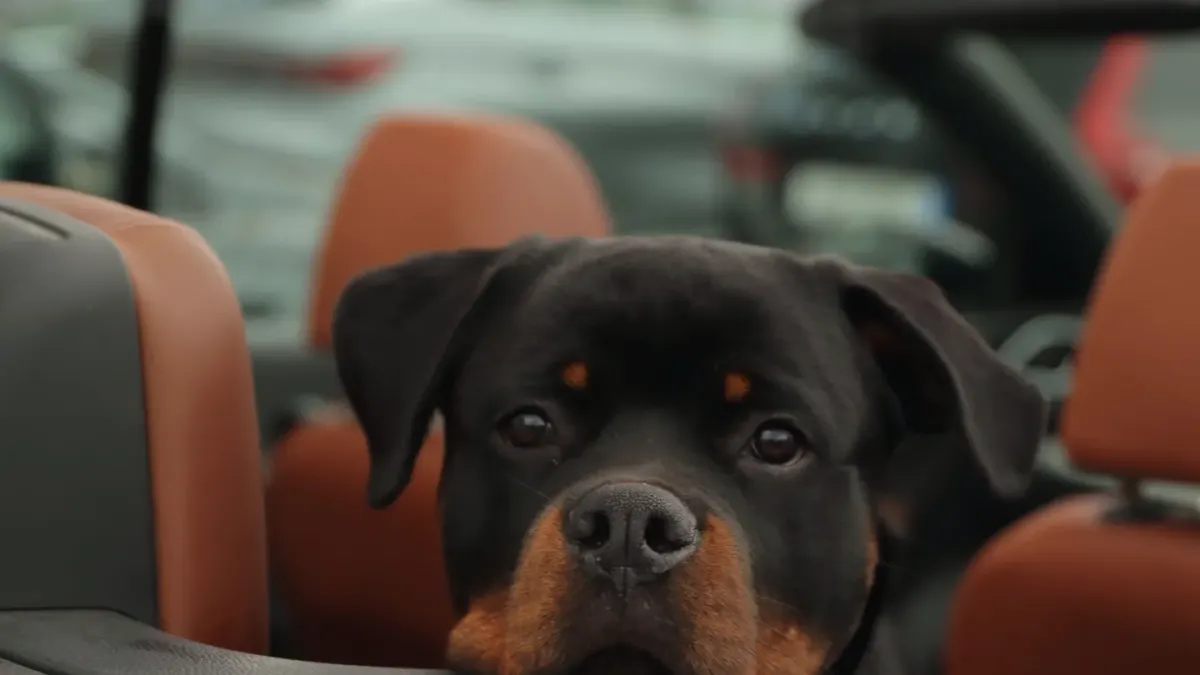
To keep an older dog comfortable on a long car ride, set your expectation first: you cannot make eight hours feel short for stiff joints, you can make every hour feel steadier. That means support for getting in, a stable place to lie, and breaks before your dog has to ask.
Why age changes the ride first
An older dog feels vibration, hard braking, and a slippery seat more than a young adult does. Dogs with osteoarthritis may help support mobility with padding and footing, yet the underlying joint change stays with them for the whole trip, which is why Merck Veterinary Manual notes stiffness, reduced range of motion, and difficulty rising in affected dogs. Vets often see the same pattern after long drives: a senior dog who loaded well but struggles to unload, pants for an hour at home, or skips stairs that evening. In practice, that tired landing usually traces back to too few stops and too much sliding around.
Colleen drives with Shylo, her 12-year-old neutered male Jack Russell Terrier from Daly City, California. On a 180-mile family trip he stood the whole first two hours, then refused the ramp at the rest stop and needed lifting. They switched to a back-seat hammock with a folded bath mat under him, a harness tether, and a stop every 90 minutes for water and a short sniff walk. He still moved slowly that night, but he ate normally and climbed his two front steps without help.
Comfort starts with restraint that prevents bracing.

What comfort gear gets right — and wrong
A thick bed helps, but only when your dog can stay on it. A crash-tested harness or a secured crate matched to guidance on traveling with your pet from the AVMA may help support safer, calmer positioning by limiting falls and sudden shifts. Compare choices in Dog Car Seat Belt vs Crate vs Barrier: Which Restraint Is Safest? before you buy, then test the fit at home. You want room to lie on the side with legs extended, nonslip footing, and no pressure across the throat.
Cool air matters more for seniors. Keep the vents open near your dog, offer water at each stop with gear from Collapsible Bowls and Feeding Gear for Traveling Dogs, and skip heavy feeding right before rolling. If your dog pants, drools, whines, or keeps shifting weight, treat that as information rather than disobedience.
Medication timing deserves a call ahead.
Your hour-by-hour plan for calmer miles
Talk with your veterinarian a week before travel about pain management, motion sickness, and anxiety support for your specific dog. Bring any prescribed product in its original label, keep the routine as close to home as you can, and review Center for Pet Safety harness and crate test results when you choose Center for Pet Safety rated equipment.
Try this rhythm:
Lift, do not coax a jump. Use a ramp with a gentle slope, a low platform, or a two-person lift for large dogs. Keep the leash on until the tether or crate door is secured.
Stop every 90 to 120 minutes. Offer water, a 5 to 10 minute easy walk, and a bathroom chance on grass away from traffic. Look for limping, heavy panting, or reluctance to reload.
Feed light and familiar. Keep meals small, on schedule, and bland if your vet advises it. Save the big meal for arrival.
Settle the senses. A familiar blanket, a chew your dog already knows, white noise or low music, and a shaded window may help support resting behavior without adding new stress.
Watch heat, cold, and footing at night. Older dogs chill faster during fuel stops, so bring the blanket along and park where your dog can load without ice, gravel, or a steep curb.
Could your next long ride feel easier if you planned it around your dog’s joints rather than the mileage?
Sources
- Traveling With Your Pet — AVMA
- Pet Safety Research and Test Results — Center for Pet Safety